 | | | | | |||||||
|   | ||||||||||
| What has surprised you about looking at the adolescent brain? The most surprising thing has been how much the teen brain is changing. By age six, the brain is already 95 percent of its adult size. But the gray matter, or thinking part of the brain, continues to thicken throughout childhood as the brain cells get extra connections, much like a tree growing extra branches, twigs and roots. In the frontal part of the brain, the part of the brain involved in judgment, organization, planning, strategizing -- those very skills that teens get better and better at -- this process of thickening of the gray matter peaks at about age 11 in girls and age 12 in boys, roughly about the same time as puberty. After that peak, the gray matter thins as the excess connections are eliminated or pruned. So much of our research is focusing on trying to understand what influences or guides the building-up stage when the gray matter is growing extra branches and connections and what guides the thinning or pruning phase when the excess connections are eliminated. And what do you think this might mean, this exuberant growth of those early adolescent years? I think the exuberant growth during the pre-puberty years gives the brain enormous potential. The capacity to be skilled in many different areas is building up during those times. What the influences are of parenting or teachers, society, nutrition, bacterial and viral infections -- all these factors -- on this building-up phase, we're just beginning to try to understand. But the pruning-down phase is perhaps even more interesting, because our leading hypothesis for that is the "Use it or lose it" principle. Those cells and connections that are used will survive and flourish. Those cells and connections that are not used will wither and die. So if a teen is doing music or sports or academics, those are the cells and connections that will be hard-wired. If they're lying on the couch or playing video games or MTV, those are the cells and connections that are going [to] survive. |
| |||||||||
Right around the time of puberty and on into the adult years is a particularly critical time for the brain sculpting to take place. Much like Michelangelo's David, you start out with a huge block of granite at the peak at the puberty years. Then the art is created by removing pieces of the granite, and that is the way the brain also sculpts itself. Bigger isn't necessarily better, or else the peak in brain function would occur at age 11 or 12. ... The advances come from actually taking away and pruning down of certain connections themselves. ![[It's] not that the teens are stupid or incapable of [things]. It's sort of unfair to expect them to have adult levels of organizational skills or decision making before their brain is finished being built.](https://lh3.googleusercontent.com/blogger_img_proxy/AEn0k_upk6QeFFEqIZ1XPEsbElPSX_926648NDGmxJ6Q1TwSdndEZ0RziYrFkZVjIYDAnuPz2VLJeHxIKg1Q4rNMqHrvbGrz_uyMmmw5ZAf-izEbGriwg2tidCJRz_yPMYRMUEw2_fjIMrNI5823=s0-d) The frontal lobe is often called the CEO, or the executive of the brain. It's involved in things like planning and strategizing and organizing, initiating attention and stopping and starting and shifting attention. It's a part of the brain that most separates man from beast, if you will. That is the part of the brain that has changed most in our human evolution, and a part of the brain that allows us to conduct philosophy and to think about thinking and to think about our place in the universe. ... I think that [in the teen years, this] part of the brain that is helping organization, planning and strategizing is not done being built yet ... [It's] not that the teens are stupid or incapable of [things]. It's sort of unfair to expect them to have adult levels of organizational skills or decision making before their brain is finished being built. ... It's also a particularly cruel irony of nature, I think, that right at this time when the brain is most vulnerable is also the time when teens are most likely to experiment with drugs or alcohol. Sometimes when I'm working with teens, I actually show them these brain development curves, how they peak at puberty and then prune down and try to reason with them that if they're doing drugs or alcohol that evening, it may not just be affecting their brains for that night or even for that weekend, but for the next 80 years of their life. ... Tell me a little bit about how the brain develops. How does the brain -- arguably the most complicated three-pound mass of matter in the known universe -- how does the brain become the brain? It does so through two simple but powerful processes. The first one is over-production. The brain produces way more cells and connections than can possibly survive. There's only so many nutrients, there's only so many growth factors, there's only so much room in the skull. After this vast over-production, there is a fierce, competitive elimination, in which the brain cells and connections fight it out for survival. Only a small percentage of the cells and connections make it. This is a process that we knew happened in the womb, maybe even the first 18 months of life. But it was only when we started following the same children by scanning their brains at two-year intervals that we detected a second wave of over-production. This second wave of over-production is manifest by an actual thickening in the gray matter, or the thinking part, in the front part of the brain. As this second wave of over-production is occurring, it prepares the adolescent brain for the challenges of entering the next stage of life, the adult years. There's enormous potential at that time. People can take many different life directions. But about around that time of puberty, people start specializing, so to speak. They start deciding, "This is what I'm going to be good at, whether it be sports or academics or art or music." All the life choices, even though they are still there, start getting whittled away, and we have to start sort of focusing in on what makes us unique and special. ... Do you have particular concerns about that period, too, though? Yes. It's a time of enormous opportunity and of enormous risk. And how the teens spend their time seems to be particularly crucial. If the "Lose it or use it" principle holds true, then the activities of the teen may help guide the hard-wiring, actual physical connections in their brain. ... Can you describe to me what people used to believe about the brain, actually, very recently? One of the most exciting discoveries from recent neuroscience research is how incredibly plastic the human brain is. For a long time, we used to think that the brain, because it's already 95 percent of adult size by age six, things were largely set in place early in life. ... [There was the] saying. "Give me your child, and by the age of five, I can make him a priest or a thief or a scholar." [There was] this notion that things were largely set at fairly early ages. And now we realize that isn't true; that even throughout childhood and even the teen years, there's enormous capacity for change. We think that this capacity for change is very empowering for teens. ... This is an area of neuroscience that's receiving a great deal of attention ... the forces that can guide this plasticity. How do we optimize the brain's ability to learn? Are schools doing a good job? Are we as parents doing a good job? And the challenge now is to ... bridging the gap between neuroscience and practical advice for parents, teachers and society. We're not there yet, but we're closer than ever, and it's really an exciting time in neuroscience. ... The next step will be, what can you do about it, what can we do to help people? What can we do to help the teen optimize the development of their own brain? ... There has been a great deal of attention on the early years, and particularly on stimulating the early brain. What do you think of that work and that popularization of that brain science? There's been a great deal of emphasis in the 1990s on the critical importance of the first three years. I certainly applaud those efforts. But what happens sometimes when an area is emphasized so much, is other areas are forgotten. And even though the first 3 years are important, so are the next 16. And the ages between 3 and 16, there's still enormous dynamic activity happening in brain biology. I think that that might have been somewhat overlooked with the emphasis on the early years. ... Not so long ago, people were emphasizing teaching little children through flashcards, through particular kinds of mobiles with black-and-white checks on them, playing Mozart. In fact, some states have sent CDs back with new mothers. What do you think of that? Has that been a misinterpretation of brain science? ... We all want to do the best for our children. And what I fear is happening is that we're leaping too far from the neuroscience to such things. I don't think there is any established videotape or CD or computer program or type of music to play that we've shown with any scientific backing to actually help our children. The more technical and more advanced the science becomes, often the more it leads us back to some very basic tenets of spending loving, quality time with our children. The brain is largely wired for social interaction and for bonding with caretakers. And sometimes it's even disappointing to people that, with all the science and all the advances the best advice we can give is things that our grandmother could have told us generations ago: to spend loving, quality time with our children. ... I think [it] probably does more harm than good for parents to be confronted with so many of these conflicting reports in the media without any scientific basis. ... What directions is the research taking to explore how we can optimize brain development? Now that we've been able to detect the developmental path of different parts of the brain, the next phase of our research is to try to understand what influences these brain development paths. Is it nutrient or parenting or video games or the activity of the [child]? Or is it genes? By studying twins, we can begin to address some of these very basic nature/nurture-type of questions. For instance, when twins are in the first grade, their parents often dress them in the same clothes. They get the same haircut. It's sort of cute how alike they are. But that's not as cool in high school anymore. And so a lot of the twins as teens in high school start doing different things. The one who was a little bit better in sports may become an athlete. The one who was a little bit better at academics may become a scholar. Or one may turn to music and one to art. But they often have different daily activities. So we can scan the brains when the twins are young and doing everything very much alike; then we can scan them as teenagers, when they start having different daily activities. This gives us a sense of which parts of the brain are influenced by behavior and which parts by the genes themselves. We've already got some interesting early data on this. One part of the brain is called the corpus callosum. It's a thick cable of nerves that connects that two halves of the brain and is involved in creativity and higher type of thinking. It's very popular for imaging studies because it leaps out of the picture. It's very easy to measure and quantify. It's also interesting because it changes a lot throughout childhood and adolescence. It's been reported to be different in size and shape in many different illnesses that happen during childhood ... many higher cognitive thought [processes] like creativity and ability to solve problems. So it's been of great interest, especially to child psychiatrists. And what we find is that the size and shape of the corpus callosum is remarkably similar amongst twins ... and [so] seems to be surprisingly under the control of the genes. But another part of the brain -- the cerebellum, in the back of the brain -- is not very genetically controlled. Identical twins' cerebellum are no more alike than non-identical twins. So we think this part of the brain is very susceptible to the environment. And interestingly, it's a part of the brain that changes most during the teen years. This part of the brain has not finished growing well into the early 20s, even. The cerebellum used to be thought to be involved in the coordination of our muscles. So if your cerebellum is working well, you were graceful, a good dancer, a good athlete. But we now know it's also involved in coordination of our cognitive processes, our thinking processes. Just like one can be physically clumsy, one can be kind of mentally clumsy. And this ability to smooth out all the different intellectual processes to navigate the complicated social life of the teen and to get through these things smoothly and gracefully instead of lurching ... seems to be a function of the cerebellum. And so we think it's intriguing that we see all these dynamic changes in the cerebellum taking place during the teen years, along with the changes in the behaviors that the cerebellum sub-serves. What would influence the development of the cerebellum? Traditionally it was thought that physical activity would most influence the cerebellum, and that's still one of the leading thoughts. It actually raises thoughts about, as a society, we're less active than we ever have been in the history of humanity. We're good with our thumbs and video games and such. But as far as actual physical activity, running, jumping, playing, children are doing less and less of that, and we wonder, long term, whether that may have an effect on the development of the cerebellum. The recess and play seems to be the first thing that is cut out of school curriculums in tight times. But those actually may be as important, or maybe even more important, than some of the academic subjects that the children are doing. ... We think that the "Use it or lose it" principle holds for the cerebellum as well. If the cerebellum is exercised and used, both for physical activity but also for cognitive activities, that it will enhance its development. ... One analogy that computer people use is that [the cerebellum is] like a math co-processor. It's not essential for any activity. People can get by quite well without large chunks of it. But it makes many activities better. The more complicated the activity, the more we call upon the cerebellum to help us solve the problem. And so almost anything that one can think of as higher thought -- mathematics, music, philosophy, decision making, social skills -- seems to draw upon the cerebellum. ... The relationship between the findings that we have in the cerebellum and sort of practical advice or the links between behavior are not well worked out yet. That's going to be one of the great challenges of neuroscience -- to go from these neuroscience facts to useful information for parents, for teachers or for society. But it's just so recently that we've been able to capture the cerebellum that no work has yet been done on the forces that will shape the cerebellum or the link between the cerebellum shape or size and function. When you look at the recent work that you've done in terms of the frontal cortex, do you see a difference between girls and boys? Yes. One of the things that we're particularly interested in as child psychiatrists is the difference between boys' brains and girls' brains, because nearly everything that we look at as child psychiatrists is different between boys and girls -- different ages of onset, different symptoms, different prevalences and outcomes. Almost everything in childhood is more common in boys -- autism, dyslexia, learning disabilities, ADHD, Tourette's syndrome -- are all more common in boys. Only anorexia nervosa is more common in girls. So we wonder if the differences between boys' and girls' brains might help explain some of these clinical differences. The male brain is about 10 percent larger than the female brain across all the stages of ... 3 to 20; not to imply that the increased size implies any sort of advantage, because it doesn't. The IQs are very similar. But there are differences between the boy and girl brains, both in the size of certain structures and in their developmental path. The basal ganglia which are a part of the brain that help the frontal lobe do executive functioning are larger in females, and this is a part of the brain that is often smaller in the childhood illnesses. I mentioned, such as ADD and Tourette's syndrome. So girls, by virtue of having larger basal ganglia, may be afforded some protection against these illnesses. But in the general trend for brain maturation, it's that girls' brains mature earlier than boys' brains. ... | |||||||||||
Monday, December 25, 2006
Human Brain development - Jay Giedd


Sunday, December 17, 2006
Corn Bread
½C -- whole wheat flour
½C -- all purpose flour
1Tbs -- baking soda
1/4C -- oil
1C -- soymilk
⅓C - molasses or maple syrup ( Minnesotan preferrably)
Preheat oven to 375°F.
Mix ingredients together in a bowl.
Pour batter into lightly oiled 8-inch pan.
Bake for 20 minutes ( times may vary)
Serves 6.
By Debra Wasserman
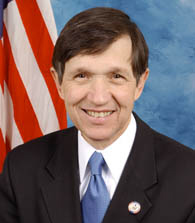
Dennis Kucinich -- a can’t lose campaign
| |
Progressives now have a candidate for president in 2008 in Dennis Kucinich.
The corporate media made him their enemy during his 2004 run, when they either ignored him or attacked him. But despite opposition by the powers that be, progressives can only win by his running.
The corporate media have made their choice clear, as in this Associated Press statement on the day Kucinich announced, “New York Sen. Hillary Rodham Clinton is considered the party's front-runner, closely followed by Illinois Sen. Barack Obama.” Considered by whom?
Ahh, there’s the rub. Considered by the transnational corporations and their Democratic Leadership Council filter on behalf of transnational investors who don’t give a damn about this country or its people, other than what they can steal from both. Hillary and Obama are going to be buried in cash and favorable media coverage as the backup plan, in case the transnational investors can’t cram another Republican down the throats of the electorate.
The corporate media have convinced the American public that candidates such as Kucinich are “out of the mainstream,” which is an outright lie. Their own polling shows the views of Kucinich are indeed mainstream. He wants universal health care, as do the majority of citizens. He wants to cut defense spending, as do the majority. He wants to clean up the environment, as do the overwhelming majority. He wants to bring the troops home from Iraq, as do the majority. You couldn’t be much more mainstream than Dennis Kucinich.
But the mass media have little to do with the mainstream. They represent their owners, board members and advertisers. These are connected to those making billions from war, billions from pollution, and billions from the cruel “health care” system whose primary function is to produce profit, not care.
The corporate media see Kucinich as their enemy and will savage him if he should get decent polling numbers, otherwise they can be expected to try to destroy him with silence, not covering anything he does from fear that he might become a blip on the electoral radar if a profile is raised.
Howard Dean showed that in the Internet age, it is possible to get financing without kneeling before the Big Boys and kissing Big Boy butt. It scared the establishment so much they echoed “the Dean scream” for days throughout corporate media in belittling him in an attempt to destroy his credibility. They won as Dean sizzled to toast from their flames.
It wasn’t that they disagreed with Dean on much outside of the war. It was more the fact that he hadn’t taken their money and they weren’t sure they completely owned his soul. How could such a man be trusted to hold the White House for them?
Now we have a wonderful choice with Kucinich. Old leftists like me, knocked down and knocked out so many times I’m sure there are those who think we must be punch drunk to keep trying for an outbreak of democracy, are urging people to get behind Kucinich in a Can’t Lose Campaign.
Already liberal friends are braying at me that Kucinich doesn’t have a chance. Corporate media echo this suggestion every four years in keeping the sheep in the fold. Stray from the corporate-backed candidates and the world may come to an end. The lesser of evils is the way to go, my man, vote evil -- let me assure you that evil is the way to go.
But Kucinich is not endangering the sacred “two-party system,” staying within the lesser-of-evil shuffle, so at least we don’t have to listen to the whimpering, “If you vote for a Green, the Republicans will win” (so vote for an evil Democrat, who will then stick bamboo shoots under your fingernails, but only nine fingers, unlike his greater evil opponent, who will go for all 10).
I believe Kucinich can actually win the primary if only two things happen. First, he has to raise big bucks on the Internet as Dean did. And second, a massive campaign of education must take place, much like what I do daily at Liberty Underground, informing liberals and leftists of the news beyond the corporate crap which passes for news in the Land of the Free, often framing it within the historical context ignored by the corporate media.
An informed voter must learn early about what will come from the corporate media to savage Kucinich: that he will be accused of being out of the mainstream, a lunatic, a man who will bring down the republic, cause economic doom and despair.
And they will have to learn about the lies told by the corporate media about his opponents. That, for example, Barack Obama is a “peace candidate” who wants out of the war in Iraq. The magnificent black writer Glen Ford pretty much popped that balloon with his recent article.
Obama is for leaving when the Iraqis are trained to be more obedient, like the Bush plan, but we don’t call Bush a man of peace for some reason (could be those hundreds of thousands of innocent dead who kind of stink up that kind of propaganda, or corporate media would go for it). The Bush/Obama plan ends when we have a replacement for Saddam in power, responding to “fetch boy, now roll over, now turn on the oil spigot -- good boy, here’s a biscuit.”
The Kucinich plan is to cut off funding for the war, except for enough to finance bringing our troops home. Now, as a combat vet, that’s what I call supporting the troops!
“Peace candidate” Obama has stated he would bomb Iran or even Pakistan under the right conditions. "Indeed,” he said, “given the depletion of our forces after the wars in Iraq and Afghanistan, we will probably need a somewhat higher budget in the intermediate future just to restore readiness and replace equipment." Citizens are not getting defense cuts from Obama.
Senator Hillary Clinton of the leadership of the Republican wing of the Democratic Party, the DLC, we are told by corporate media columnists, wants socialized medicine! Wouldn’t that be wonderful, except again, the corporate media are lying. The then First Lady’s program was to roll up managed care insurance companies into giant Wal-Marts of medical care for efficiency. The efficiency might not have resulted in any additional medical care, but it certainly would have created increased profit for the big insurance companies. Which is why, when she announced it in New York, representatives of the big medical insurance companies gave her a standing ovation.
Dennis Kucinich is pushing for an actual single-payer system like Canada’s, in which even the poorest workers have a shot at getting their broken arm set without having to wonder if they’ll lose their lodging in the deal.
The corporate media are hyping Obama insanely because he drew crowds of hundreds in New Hampshire. Shouldn’t a Democrat draw hundreds of Democrats in local city meetings, let alone meetings hyped nationally by all the major TV networks? You would think he had accomplished another Woodstock phenomenon from the coverage he got for this.
Although Obama is not a member of the Democratic Leadership Council like Hillary, Lee Sustar recently wrote, “In fact, Obama's book explicitly endorses Bill Clinton's "Third Way" - -the attempt to shed the Democrats' supposed leftist excesses and borrow pro-business policies from the Republicans.”
The corporate media know Obama, like Hillary, will sell out the American people on behalf of the owners, who keep these two as their backup plan. Sure, they want a Republican if they can get one. Republicans have shown themselves to be better lackeys, more savage and cruel. But Hillary and Obama heel well on command, and have proven their service by backing the transnational investors who run the planet and finance the political campaigns, often through their “American” corporations.
Dennis Kucinich cannot lose, and every progressive should put their weight behind him now. At the very least, a message will get out that Obama, Hillary and the Republicans will most of the time be on the opposite side of, a message citizens should be allowed to hear. The only way progressives lose is by not backing this dark horse, thusly allowing a field of butt-kissing sycophants to run unchallenged.
Thursday, December 14, 2006
Pancake Recipe by Brandy Kyllonen
2¾T--Baking powder
¼C--Sugar
1T--Nutmeg
1T--Cinnamon
1 tsp--Salt
5C--Buttermilk
5 -- eggs
1tsp -- pure vanilla extract
½C -- melted butter
Mix dry with dry.
Mix wet with wet.
Combine.
Fry on hot griddle.
Enjoy!
------
"This will knock your socks off!" - Chef Brandy Kyllonen
Wednesday, December 06, 2006
The Green Party: A Short Half-Life in Minnesota Politics

In our continuing study of the decline of third parties in the state of Minnesota, today Smart Politics examines the weakening of the state’s Green Party. Like the Independence Party, the Green Party experienced a significant downturn in public support in 2006 for almost all statewide and district races from the previous election cycle.
The growth of the Green Party in the late 1990s was in great measure a result of its drawing support from the disaffected far-left wing of the Democratic Party. The Greens received a boost in Minnesota when its endorsed candidate for President, Ralph Nader, received an impressive 5.2 percent of the vote in the Gopher State. While this showing temporarily increased the Party’s statewide profile, the Party was perhaps ultimately a victim of Nader’s success. Many people voted Green in 2000 because they were under the impression there was little difference between the candidacies of Al Gore and George W. Bush. The combination of the closeness of the Gore-Bush race, combined with what many liberals viewed to be Bush falling short of his “compassionate conservative” and “uniter not a divider” pledges, demonstrated to the 'new Greens' that there were indeed still some clear differences between the Democratic and Republican parties. As a result, many Greens flocked back to the Democratic Party in 2004, an election in which Green Party presidential candidate David Cobb received only 0.2 percent of the vote in Minnesota.
Green Party support in statewide races also largely peaked in 2002: support for Green candidates declined from 2002 to 2006 in races for Governor (2.3 to 0.5 percent), Secretary of State (3.1 percent to no candidate), and State Auditor (3.7 to 2.3 percent). Support for Green Party candidates in US Senate races remained the same in 2002 and 2006 (0.5 percent). The only positive news for the Minnesota Green Party in 2006 is that it fielded its first candidate for Attorney General (who received 1.9 percent of the vote).
The story is equally bleak in Minnesota district races. In US House elections, the Greens fielded 3 candidates in 2002, averaging 4.9 percent of the vote. In 2004 the Greens had 2 candidates on the ballot, averaging 4.2 percent of the vote. In 2006 the Green Party only managed to field one candidate. This candidate, Jay Pond in MN-05, received only 2.0 percent of the vote, a noticeable dip from the 5.7 percent he received in 2004.
In State Senate races, the Green Party fielded 8 candidates in 2002, and just 1 in 2006. The number of Greens on the ballot in State House races has fallen drastically from 17 candidates in 2002, to 7 candidates in 2004, to just 1 in 2006.
Will the Green Party be around in Minnesota in 2008? And, if so, how can it be an effective player on the political scene? A lot may depend on what Democrats do with their newfound legislative power both in Washington, D.C. and in St. Paul where they now control both legislative chambers.
source: http://blog.lib.umn.edu/oster017/smartpolitics/2006/12/the_green_party_a_short_halfli.html
Tuesday, December 05, 2006
The Decline of the Independence Party
The Independence Party of Minnesota has experienced a noticeable decline in support across Minnesota - as evidenced in its performance last month. This decline is revealed across a number of dimensions and offices, including a decreased ability to field candidates in state legislative races since 2000 (the year it disassociated itself from the national Reform Party).
Support for IP candidates in statewide races declined in 4 of 5 offices from 2002 to 2006: Governor (declining 16.2 to 6.4 percent), Secretary of State (4.5 to 3.0 percent), Attorney General (4.4 to 4.1 percent), and State Auditor (4.8 to 4.6 percent). The Independence Party candidate for US Senator did increase from 2.0 to 3.2 percent, although this was lower than the 5.8 percent the IP received for that race in 2000).
In State House races the number of Independence Party candidates has dropped from 27 in 2000, to 26 in 2002, to 20 in 2004, to just 9 in 2006. These candidates also received the lowest level of support per district in which they ran in 2006 (5.7%), down from 7.4% in 2004, 10.3% in 2002, and 9.9% in 2000.
In the State Senate only 7 Independence Party candidates were on the ballot in 2006 averaging 6.9 percent of the vote per district, less than twice the number of candidates in 2002 (16), in which candidates averaged 12.4 percent of the vote per district.
One bright spot for the Independence Party was its performance in US House races. The IP fielded 3 candidates,equaling the number on the ballots in 2004 and 2000. Tammy Lee (MN-5) recorded the highest level of voter support for the Party in a US House this decade (21.0 percent).
The Independence Party will retain its major party status in 2008, thanks to Peter Hutchinson's performance in the race for governor, but the party is facing an increased difficulty in distinguishing itself from the DFL, who appears to be drawing support away from IP candidates.
source: http://blog.lib.umn.edu/oster017/smartpolitics/2006/12/the_decline_of_the_independenc.html
Sunday, November 19, 2006
When religion loses its credibility
What if Christian leaders are wrong about homosexuality? I suppose, much as a newspaper maintains its credibility by setting the record straight, church leaders would need to do the same:
Correction: Despite what you might have read, heard or been taught throughout your churchgoing life, homosexuality is, in fact, determined at birth and is not to be condemned by God's followers.
Based on a few recent headlines, we won't be seeing that admission anytime soon. Last week, U.S. Roman Catholic bishops took the position that homosexual attractions are "disordered" and that gays should live closeted lives of chastity. At the same time, North Carolina's Baptist State Convention was preparing to investigate churches that are too gay-friendly. Even the more liberal Presbyterian Church (USA) had been planning to put a minister on trial for conducting a marriage ceremony for two women before the charges were dismissed on a technicality. All this brings me back to the question: What if we're wrong?
Religion's only real commodity, after all, is its moral authority. Lose that, and we lose our credibility. Lose credibility, and we might as well close up shop.
It's happened to Christianity before, most famously when we dug in our heels over Galileo's challenge to the biblical view that the Earth, rather than the sun, was at the center of our solar system. You know the story. Galileo was persecuted for what turned out to be incontrovertibly true. For many, especially in the scientific community, Christianity never recovered.
This time, Christianity is in danger of squandering its moral authority by continuing its pattern of discrimination against gays and lesbians in the face of mounting scientific evidence that sexual orientation has little or nothing to do with choice. To the contrary, whether sexual orientation arises as a result of the mother's hormones or the child's brain structure or DNA, it is almost certainly an accident of birth. The point is this: Without choice, there can be no moral culpability.
Answer in Scriptures
So, why are so many church leaders (not to mention Orthodox Jewish and Muslim leaders) persisting in their view that homosexuality is wrong despite a growing stream of scientific evidence that is likely to become a torrent in the coming years? The answer is found in Leviticus 18. "You shall not lie with a man as with a woman; it is an abomination."
As a former "the Bible says it, I believe it, that settles it" kind of guy, I am sympathetic with any Christian who accepts the Bible at face value. But here's the catch. Leviticus is filled with laws imposing the death penalty for everything from eating catfish to sassing your parents. If you accept one as the absolute, unequivocal word of God, you must accept them all.
For many of gay America's loudest critics, the results are unthinkable. First, no more football. At least not without gloves. Handling a pig skin is an abomination. Second, no more Saturday games even if you can get a new ball. Violating the Sabbath is a capital offense according to Leviticus. For the over-40 crowd, approaching the altar of God with a defect in your sight is taboo, but you'll have plenty of company because those menstruating or with disabilities are also barred.
The truth is that mainstream religion has moved beyond animal sacrifice, slavery and the host of primitive rituals described in Leviticus centuries ago. Selectively hanging onto these ancient proscriptions for gays and lesbians exclusively is unfair according to anybody's standard of ethics. We lawyers call it "selective enforcement," and in civil affairs it's illegal.
A better reading of Scripture starts with the book of Genesis and the grand pronouncement about the world God created and all those who dwelled in it. "And, the Lord saw that it was good." If God created us and if everything he created is good, how can a gay person be guilty of being anything more than what God created him or her to be?
Turning to the New Testament, the writings of the Apostle Paul at first lend credence to the notion that homosexuality is a sin, until you consider that Paul most likely is referring to the Roman practice of pederasty, a form of pedophilia common in the ancient world. Successful older men often took boys into their homes as concubines, lovers or sexual slaves. Today, such sexual exploitation of minors is no longer tolerated. The point is that the sort of long-term, committed, same-sex relationships that are being debated today are not addressed in the New Testament. It distorts the biblical witness to apply verses written in one historical context (i.e. sexual exploitation of children) to contemporary situations between two monogamous partners of the same sex. Sexual promiscuity is condemned by the Bible whether it's between gays or straights. Sexual fidelity is not.
What would Jesus do?
For those who have lingering doubts, dust off your Bibles and take a few hours to reacquaint yourself with the teachings of Jesus. You won't find a single reference to homosexuality. There are teachings on money, lust, revenge, divorce, fasting and a thousand other subjects, but there is nothing on homosexuality. Strange, don't you think, if being gay were such a moral threat?
On the other hand, Jesus spent a lot of time talking about how we should treat others. First, he made clear it is not our role to judge. It is God's. ("Judge not lest you be judged." Matthew 7:1) And, second, he commanded us to love other people as we love ourselves.
So, I ask you. Would you want to be discriminated against? Would you want to lose your job, housing or benefits because of something over which you had no control? Better yet, would you like it if society told you that you couldn't visit your lifelong partner in the hospital or file a claim on his behalf if he were murdered?
The suffering that gay and lesbian people have endured at the hands of religion is incalculable, but they can look expectantly to the future for vindication. Scientific facts, after all, are a stubborn thing. Even our religious beliefs must finally yield to them as the church in its battle with Galileo ultimately realized. But for religion, the future might be ominous. Watching the growing conflict between medical science and religion over homosexuality is like watching a train wreck from a distance. You can see it coming for miles and sense the inevitable conclusion, but you're powerless to stop it. The more church leaders dig in their heels, the worse it's likely to be.
Oliver "Buzz" Thomas is a Baptist minister and author of an upcoming book, 10 Things Your Minister Wants to Tell You (But Can't Because He Needs the Job).
When religion loses its credibility
What if Christian leaders are wrong about homosexuality? I suppose, much as a newspaper maintains its credibility by setting the record straight, church leaders would need to do the same:
Correction: Despite what you might have read, heard or been taught throughout your churchgoing life, homosexuality is, in fact, determined at birth and is not to be condemned by God's followers.
Based on a few recent headlines, we won't be seeing that admission anytime soon. Last week, U.S. Roman Catholic bishops took the position that homosexual attractions are "disordered" and that gays should live closeted lives of chastity. At the same time, North Carolina's Baptist State Convention was preparing to investigate churches that are too gay-friendly. Even the more liberal Presbyterian Church (USA) had been planning to put a minister on trial for conducting a marriage ceremony for two women before the charges were dismissed on a technicality. All this brings me back to the question: What if we're wrong?
Religion's only real commodity, after all, is its moral authority. Lose that, and we lose our credibility. Lose credibility, and we might as well close up shop.
It's happened to Christianity before, most famously when we dug in our heels over Galileo's challenge to the biblical view that the Earth, rather than the sun, was at the center of our solar system. You know the story. Galileo was persecuted for what turned out to be incontrovertibly true. For many, especially in the scientific community, Christianity never recovered.
This time, Christianity is in danger of squandering its moral authority by continuing its pattern of discrimination against gays and lesbians in the face of mounting scientific evidence that sexual orientation has little or nothing to do with choice. To the contrary, whether sexual orientation arises as a result of the mother's hormones or the child's brain structure or DNA, it is almost certainly an accident of birth. The point is this: Without choice, there can be no moral culpability.
Answer in Scriptures
So, why are so many church leaders (not to mention Orthodox Jewish and Muslim leaders) persisting in their view that homosexuality is wrong despite a growing stream of scientific evidence that is likely to become a torrent in the coming years? The answer is found in Leviticus 18. "You shall not lie with a man as with a woman; it is an abomination."
As a former "the Bible says it, I believe it, that settles it" kind of guy, I am sympathetic with any Christian who accepts the Bible at face value. But here's the catch. Leviticus is filled with laws imposing the death penalty for everything from eating catfish to sassing your parents. If you accept one as the absolute, unequivocal word of God, you must accept them all.
For many of gay America's loudest critics, the results are unthinkable. First, no more football. At least not without gloves. Handling a pig skin is an abomination. Second, no more Saturday games even if you can get a new ball. Violating the Sabbath is a capital offense according to Leviticus. For the over-40 crowd, approaching the altar of God with a defect in your sight is taboo, but you'll have plenty of company because those menstruating or with disabilities are also barred.
The truth is that mainstream religion has moved beyond animal sacrifice, slavery and the host of primitive rituals described in Leviticus centuries ago. Selectively hanging onto these ancient proscriptions for gays and lesbians exclusively is unfair according to anybody's standard of ethics. We lawyers call it "selective enforcement," and in civil affairs it's illegal.
A better reading of Scripture starts with the book of Genesis and the grand pronouncement about the world God created and all those who dwelled in it. "And, the Lord saw that it was good." If God created us and if everything he created is good, how can a gay person be guilty of being anything more than what God created him or her to be?
Turning to the New Testament, the writings of the Apostle Paul at first lend credence to the notion that homosexuality is a sin, until you consider that Paul most likely is referring to the Roman practice of pederasty, a form of pedophilia common in the ancient world. Successful older men often took boys into their homes as concubines, lovers or sexual slaves. Today, such sexual exploitation of minors is no longer tolerated. The point is that the sort of long-term, committed, same-sex relationships that are being debated today are not addressed in the New Testament. It distorts the biblical witness to apply verses written in one historical context (i.e. sexual exploitation of children) to contemporary situations between two monogamous partners of the same sex. Sexual promiscuity is condemned by the Bible whether it's between gays or straights. Sexual fidelity is not.
What would Jesus do?
For those who have lingering doubts, dust off your Bibles and take a few hours to reacquaint yourself with the teachings of Jesus. You won't find a single reference to homosexuality. There are teachings on money, lust, revenge, divorce, fasting and a thousand other subjects, but there is nothing on homosexuality. Strange, don't you think, if being gay were such a moral threat?
On the other hand, Jesus spent a lot of time talking about how we should treat others. First, he made clear it is not our role to judge. It is God's. ("Judge not lest you be judged." Matthew 7:1) And, second, he commanded us to love other people as we love ourselves.
So, I ask you. Would you want to be discriminated against? Would you want to lose your job, housing or benefits because of something over which you had no control? Better yet, would you like it if society told you that you couldn't visit your lifelong partner in the hospital or file a claim on his behalf if he were murdered?
The suffering that gay and lesbian people have endured at the hands of religion is incalculable, but they can look expectantly to the future for vindication. Scientific facts, after all, are a stubborn thing. Even our religious beliefs must finally yield to them as the church in its battle with Galileo ultimately realized. But for religion, the future might be ominous. Watching the growing conflict between medical science and religion over homosexuality is like watching a train wreck from a distance. You can see it coming for miles and sense the inevitable conclusion, but you're powerless to stop it. The more church leaders dig in their heels, the worse it's likely to be.
Oliver "Buzz" Thomas is a Baptist minister and author of an upcoming book, 10 Things Your Minister Wants to Tell You (But Can't Because He Needs the Job). http://www.amazon.com/Things-Your-Minister-Wants-Tell/dp/0312363796/sr=8-1/qid=1170349238/ref=pd_bbs_sr_1/002-2824429-6070466?ie=UTF8&s=books
Saturday, November 18, 2006
Jack Uldrich: Blame Hatch for his own defeat
There's no reason to think Peter Hutchinson's presence in the governor's race was a factor.
Famed Wall Street investor Warren Buffett once said that the problem with conventional wisdom is that too often it is long on convention and short on wisdom. I was reminded of this recently because in the aftermath of the election it has become conventional wisdom among the politicos, pundits and DFLers especially that Peter Hutchinson "cost" Mike Hatch the gubernatorial election.This is wrong.
In a democracy, a person is free to vote for whomever he or she believes is the best person. To suggest people should willfully vote for a candidate whom they believe is inferior is the antithesis of democracy. The solution for DFLers is not to blame Hutchinson; it is to endorse better candidates.
There is a solution to this problem, and it is called instant runoff voting. Unfortunately, the DFL Party has never embraced it. This is in spite of the fact that many of the same people now blaming Hutchinson for Hatch's defeat still blame Tim Penny for Roger Moe's loss in 2002.
The DFL had four years to forge a solution. It did not. To be fair, it is entirely possible that such legislation would have been blocked by the Republicans or vetoed by Gov. Tim Pawlenty. But that does not excuse the DFL for refusing to either embrace the idea in its party platform or introduce a bill in the Legislature.
 This continued indifference to a solution suggests the DFL remains impervious to the notion that many Minnesotans want more political options -- not a continuation of the status quo.
There are three reasons why the conventional wisdom about Hatch's defeat is wrong. First, according to the Star Tribune's own exit polling, 43 percent of self-proclaimed independents voted for Tim Pawlenty, and 43 percent voted for Hatch. This suggests that independents -- who were the people Hutchinson most appealed to -- were equally inclined to vote Republican as DFL. Therefore, a strong argument could be made that Hatch's defeat would have been no worse without Hutchinson in the race.
Many of Hutchinson's most visible and prominent supporters were Republicans, including former Lt. Gov. Joanell Dyrstad; former House Speaker Rod Searle, and scores of other prominent business leaders.
Second, and again using the Star Tribune's own polling, Peter Hutchinson's support in the polls from the time of the State Fair through Election Day remained consistent at about 7 percent. This implies that any last-minute erosion of Hatch's support did not go to Hutchinson, but straight to Pawlenty.
This leads to the third and most important point: It was not Hutchinson who "cost" Hatch the election, but Hatch.
Without Judi Dutcher's E85 gaffe and his own overblown response, it could very well have been Pawlenty complaining that Hutchinson cost him the election.
Of course, he, too, would have been misguided because a person's vote belongs to no one but the person for whom the vote was cast. But I guess that's the beauty of conventional wisdom. It doesn't have to submit itself to the facts.
Jack Uldrich is the former chair of the Independence Party of Minnesota.
Chris Stewart: An apology and a call for action to lift kids out of poverty

Furor over website has diverted attention from serious challenges that confront the Minneapolis schools.
The timing could not be worse for our school district. Over the course of the last several months I have met many people who put their faith in me and who voted for me. They were looking to my colleagues and me to restore public trust in our district. What should have been a joyful and hopeful time after the election has been damaged by news of this incident. I am painfully aware of the gravity of this situation.
I entered the race for school board with a lot of energy, some good ideas, the best of intentions, and a stubborn mission to open the doors for kids to leave poverty. I wanted to craft policies to help kids who are struggling find a path into the workforce, much as I had been able to do. The last thing I wanted to do was give people a reason to criticize our schools or divide along racial lines. I feel particularly sick to be associated with something viewed as "hate." I hate no one and I believe that we can work through the difficult and painful politics of race by discussing the issues openly. I am deeply sorry for damaging the public discourse on race that we so badly need to have.
Some people have asked for more details, so let me state a few things for the record. I have been part of several writers' groups for years. I have published poetry, short stories, and newspaper articles on poverty and race. Over the years I have made many friends who write for different purposes. The Tammy Lee spoof was written by a group of people who blog together. I participated in very loose conversations about politics with these friends and some of what I said is part of the spoof they created. I did not create or publish a hate site, nor am I responsible for everything posted on it. I have contributed to the blog in the past and once owned the domain name. Despite these disclaimers, I accept responsibility for the site and its misguided content.
I feel strongly about restoring order in our schools, increasing the prominence of math and science in the curriculum and using public education as a way to move young people into jobs with good pay. Too many kids are not making it into the workforce, and I have a strong vision of how vocational education can prepare many of them for a better life. I am deeply troubled by poor performance in high-poverty, racially isolated schools. I decided to run for the Minneapolis school board because I believed my experience in workforce development, social services and staffing would open doors for people who might otherwise be excluded from the prosperity of Minneapolis. This still drives me to push an agenda for those who have no one opening the gate for them.
I pledge to work hard to bring real change for our schools. Despite my mistake, I want and intend to prove myself as a reliable and effective leader who can help create a vision that leaves us all in better shape.
Chris Stewart is a consultant and member-elect of the Minneapolis School Board.
Thursday, November 09, 2006
Turnover of state offices is one for history books
Robert Franklin, Star Tribune
Last update: November 08, 2006 – 10:03 PM
Minnesotans elected three new state constitutional officers Tuesday, and the trio could be around for a while.
Attorney General-elect Lori Swanson, Auditor-elect Rebecca Otto and Secretary of State-elect Mark Ritchie join an exclusive club of officeholders noted for longevity and stability:
Minnesota has had just eight attorneys general in the past 67 years, eight auditors in the past 75 years, eight secretaries of state in the past century.
For the three new constitutional officers, "the longevity begins now," said Hy Berman, a retired University of Minnesota history professor.
Berman called Tuesday's vote "a volatile shift in electoral sentiments" and "a DFL sweep" that didn't propel Attorney General Mike Hatch into the governor's office only because of the third-party candidacy of Peter Hutchinson.
All three of the winning DFLers won their races by margins of 100,000 to 265,000 votes, while Hatch lost to incumbent Gov. Tim Pawlenty by about 22,000.
Swanson, a top aide to Hatch, easily defeated state Rep. Jeff Johnson, R-Plymouth. She said Wednesday that voters responded to her "incredibly passionate" desire to continue to "stand up for people, stand up for the ordinary citizen."
The secretary of state supervises elections, and Ritchie defeated two-term Republican incumbent Mary Kiffmeyer, arguing that she sought to depress opposition turnout.
However, Ritchie said he hopes to continue some of her initiatives, especially in working with children on the importance of voting.
Otto defeated Republican Pat Anderson, who served one four-year term, alleging that the incumbent shaded audits in a partisan way. Otto said she wants to make the office more proactive, less "reactive and punitive" and more visible.
Many reelected for years
Historically, many constitutional officers haven't been extremely visible, and incumbents have typically won reelection except in years of party sweeps.
Chuck Slocum, a former state Republican chairman, said the changes in auditor and secretary of state were unexpected, and "those offices may have been perceived by some voters as being more partisan than they are."
Warren Spannaus, attorney general from 1971 to 1982, said relations among constitutional officers don't have to be partisan. Spannaus said he got along best with a Republican governor, Al Quie.
In addition to Spannaus, longtime constitutional officeholders in recent memory included Hubert Humphrey III, who served 16 years as attorney general; Val Bjornson, 22 years as treasurer, an office abolished in 2002; Joseph Donovan, 16 years as secretary of state; Joan Growe, 24 years as secretary of state, and Stafford King, 38 years as auditor.
Some officeholders advanced, notably Democratic Attorney General Walter Mondale, appointed to the U.S. Senate in 1964, and Republican State Auditor Arne Carlson, elected governor in 1990.
Based on history, Swanson would do well not to follow her boss in running for governor. The last four attorneys general -- Republican Doug Head and DFLers Spannaus, Humphrey and Hatch -- all tried and lost.
For the record, Swanson, who entered the race this summer after the DFL endorsee dropped out, said she has no such plans.
"I wasn't planning on running for attorney general," she said Wednesday. "I'm a politician of 3½ months."
Robert Franklin • 612-673-4543 • rfranklin@startribune.com
source: http://www.startribune.com/587/story/798062.html

GREENS CITE ELECTION DAY VICTORIES -- READY TO MOVE FORWARD IN MINNESOTA
11.08.06
Green Party of Minnesota
Contact: Rhoda Gilman, Green Party of Minnesota Politics Chair, (651)
224.6383
GREENS CITE ELECTION DAY VICTORIES -- READY TO MOVE FORWARD IN MINNESOTA
Minneapolis** The Green Party made history this year in securing enough
signatures to place five statewide, two congressional, and two legislative
candidates on the ballot by petition.
There were Green Party victories in several local races, including St.
Francis, where Leroy Schaeffer won his bid for City Council with 29.72% of
the vote and Winona, where Green Party member Dwayne Voegeli won re-election
as a county commissioner. In Minneapolis voters approved the use of Instant
Runoff Voting in municipal elections. Garnering 2.33%, and 1.93%
respectively, Green Party candidates Dave Berger for State Auditor and Papa
John Kolstad for Attorney General assured that the Green Party will continue
as a minor party in the state. Others, like the Constitution Party, were
not so successful, and the Greens remain the state¹s only minor party.
"The Green Party has worked for years in a multi-partisan effort to promote
electoral reforms such as Instant Runoff Voting in Minneapolis." said
Darrell Gerber, Green Party member and member of the board of the Better
Ballot Campaign. Minneapolis became the second major U.S. City (after San
Francisco) to adopt the treasured Green goal of Instant Runoff Voting, and
it passed by nearly a two-to-one vote. According to Dave Berger, candidate
for state auditor in 2002 and again this year, "We have won a structural
change that is far more important for the future than election to a few
offices. Four years ago most Minnesota voters had never heard of IRV, but
the work of the Green Party has changed that."
In reviewing election results last night, Green Party activists agreed that
while concerted efforts to eliminate Green candidates had partially
succeeded, Greens had won significant success on the issues they championed.
"Green candidates were blanked out by the mainstream media," declared Papa
John Kolstad, who ran for attorney general. "Our exclusion from candidate
listings and from debates, including those on Minnesota Public Radio, was
outrageous, and it was a great disservice to the voters." But while Greens
failed to regain major party status, the long-range impact of their repeated
campaigns could be clearly seen.
In Minneapolis, Keith Ellison, the first Muslim to be sent to the U.S.
Congress, campaigned on a Green platform. "His issues were identical to
those I put forward in 2004 and again this year," said Green Party candidate
for Congress Jay Pond. "Our campaigns were what brought them to the
forefront with voters." Those issues, including single-payer health care,
which all Green candidates listed as a top priority this year, also played a
strong role in overthrowing Republican control of the state House of
Representatives.
While Greens build toward the 2008 elections, they will continue to work
with popular movements and with all levels of government on issues that
reflect the values of the party. Those fundamental values include
Grassroots Democracy, Social and Economic Justice, Non-Violence, and
Ecological Wisdom.
For More Information on the Green Party of Minnesota see: www.mngreens.org
Saturday, October 07, 2006
The 10 Commandments of Web 2.0
1. I am the Lord thy Google, which have brought thee out of the land of Web 1.0, out of the house of bondage. Thou shalt have no other search engines before me.
G knows when you are sleeping (Google Calendar), G knows when you’re awake (Google Alerts), he knows if you’ve been bad or good (Google Desktop), so be good for Google’s sake. Google has more power than God. If you don’t believe me, check out the results: “Google”: 114,000,000 vs. “God”: 40,600,000.
2. Thou shalt not take the name of Apple in vain.
The music of the righteous man is beset on all sides by the iniquities of the RIAA and the tyranny of MSN. Blessed is he, who in the name of iTunes and 99 cents, shepherds the weak through the valley of “The Darkness,” for he is truly his brother’s keeper and the finder of “Lost” children. And I will Digg down thee with great vengeance and furious anger those who would attempt to poison and destroy my Macbook. And you will know my name is Steve Jobs when I lay my DRM vengeance upon thee.
3. Thou shalt not make copies of any Flickr image, or any likeness of anything that is in heaven above, or that is in the earth beneath, or that is in the water under the earth without first checking the creative commons license. Thou shalt not download it thyself and serve them from your server.
While YouTube plays the “Copy? Right!” game, and fair use is getting stretched wider than America’s waistline, the idea of intellectual property still exists and is enforceable. If nothing else it’s good karma – don’t steal other people’s art, photos, or video without permission, attribution, or at least a little “Thanks XXX, whoever you are”, muttered to yourself.
4. Remember the sabbath day, to keep it holy.
Get the hell out of the house Sunday. Seriously. The world will not end if you don’t blog for 1 day out of the week. Go take a walk in the park or streak a football game. It will give you something to blog about on Monday.
5. Honor thy fathr and thy mothr: thy website names may not be long.
Avoid all vowels. At all costs. At all times. Also, give your mothr some props and put her in your top 8.
6. Thou shalt not kill your comments.
Only Seth Godin and Satan have blogs without comments. If you’re going to have a blog, let people interact with it.
7. Thou shalt not commit adultery (if you have an AOL account.)
The AOL data leak showed us all the dangers of search histories and large companies releasing large amount of semi-personally identifiable information. If you’re going to get some cookie, delete your cookies. And if you can, cancel your AOL account.
8. Thou shalt not steal successful ideas and lame them out.
If you’ve always wanted “School Your Way” or you want to “Let Your Page be Your Stage”, then check out the really hip Wal-Mart and AOL social networks. Tubular! Or you can always create clones of Digg (Netscape) or YouTube (MSN Soapbox) if cloning MySpace seems a bit too daunting.
9. Thou shalt not bear false witness against Wikipedia.
I’m looking at you Steven Colbert. We can’t have just anyone modifying the sum of all human knowledge at will. Not unless we live in Washington and/or our last names start with O’Reilly.
10. Thou shalt not bookmark thy neighbor’s house, thou shalt not bookmark thy neighbor’s wife, nor his manservant, nor his maidservant, nor his ox, nor his ass, nor anything that is thy neighbor’s.
It’s called tagging now and you should covet it like crazy. And you must put it in a cloud – it’s most angelic. Here’s a way to tag that wife, ass, house, and maidservant properly:
big house AOL cheating donkey manservant maidservant neighbor wife hot ox Oregon trail sweet wheels spinnin maiden oxen you have just died of dysentery synonyms donkey ass what don’t get it web2.0 digg how covet really want more ye olde scurvy
Wednesday, September 27, 2006
Cavlan's brigade ( opinion )
It’s 3pm on Thursday, September 21 and I’m sitting in Ms. Harder’s room on the third floor of Patrick Henry High School in North Minneapolis. State Representative Keith Ellison is two rows over, picking at his finger nails, fidgeting. Businesswoman and former TV news reporter Tammy Lee is sitting across the room, calmly running through her mental notes.
The three of us are sitting in cramped desks as students file in, most of which are here to pick up some extra credit points. A few minutes later the room is full and Alan Fine, an author and businessman has arrived.
Ellison, Lee and Fine, of course, are the Democratic, Independent and Republican nominees for Martin Sabo’s vacated seat in Minnesota’s 5th Congressional District. The trio is at the high school for a “Political Forum on Education/Students' issues.”
If the event was a fashion contest, Ellison would place a distant third. Fine and Lee are immaculately dressed in formal, business-li
 ke attire while Ellison dons a greenish, tweed sport coat and well-worn, brown shoes.
The highlight of the intro period came after Fine asked the students “Do any of you have a dream?” When one youngster said that he wanted “to be in the NBA”, the Republican nominee mistook the “N” for “M” and replied, “Oh, you want to be a businessman.”
About 10-15 minutes into the festivities, Michael Cavlan, the Green Party nominee for Mark Dayton’s Senate seat, ambles in. A registered nurse, Cavlan does not look nor act like a political candidate. Disheveled in appearance and lacking composure, he warns the students about the evils of military recruiters and calls for the impeachment of George W. Bush.
Cavlan’s radical views did attract the attention of the students however, and they pepper him with inquiries during the Q&A period. That unfortunately, means less face time for Ellison, Lee and Fine. The aggressive Ellison is quick to jump in first when students do not address a question directly to Cavlan.
It doesn’t take long to see why Ellison, despite his controversial past, had the support needed to bring home the Democratic nomination. A dynamic speaker, his personality casts a large shadow that Lee and Fine have a hard time escaping.
Lee is composed and appears very capable, but lacks the force to counteract Ellison’s charisma. Fine, while intelligent and articulate, seems out of his element and has trouble connecting with the students.
As the proceedings wrap up a female, African-American faculty member chimes in with a stern scolding of Fine for his criticism of Ellison’s ties with the Nation of Islam. Ellison tries to jump in first, but Fine eventually wins out and defends his earlier comment by labeling the organization a “hate group” and compares its leader Louis Farrakhan to David Duke.
The Democrat stood arms crossed, glaring at Fine as he wrapped up his comments. Then, at the urging of the previously identified faculty member, Ellison took the high road, and retorted, “Although he hasn’t asked me, I forgive Mr. Fine (for his comments).”
With the tension receding, class was adjourned. As Ms. Harder passes out bus tokens to the students, Ellison and Fine exchange a limp handshake. Fine and Lee quickly headed for the door and Ellison lingers in the classroom, chatting with some students for a few moments before exiting. Cavlan meanwhile stays put, he is surrounded by students and clearly basking in the attention.
Tuesday, September 26, 2006
National IDs -MN Green Party Discussion
> law problems would have a problem with being finger
> printed but maybe I'm wrong.
>
You are, indeed, wrong. This comes to a basic question - Do you
trust your government? If you do, then you will have a difficult
time understanding my concerns. However, the logic that "Only people
with law problems would have a problem with..." is rhetoric that is
used repeatedly by governments to infringe on our civil rights.
If you ask me the more abstract question "Can you trust ANY
government?" I will emphatically answer no. Governments, like
corporations can not be trusted. *Individuals* can be trusted but
governments and corporations (including non-profits and NGOs) change
their leadership every so often and you have little control over who
will be next and what abuses they will commit.
The Magna Carta was written with this fact in mind. The US
Constitution took it a bit further and the Bill of Rights went
further still. These documents are premised on the basic assumption
that government must be restrained because its resources are so vast
that any given individual is virtually powerless against it.
Every aspect of the Bill of Rights is designed to restrain the
government and empower the people against their own government.
The rhetoric that "only people with something to hide should fear the
government" is often accompanied by a lack of understanding that an
accused person is "innocent until proven guilty." I particularly
remember this problem in my Criminal Constitutional Procedure
course. Some people are virtually incapable of understanding why
some evidence must be rejected by the court. Their logic is "but
he's guilty, so why can't we show this evidence?" We can't show that
evidence because the government broke its own rules to get it and if
we allow the Government to go over that line "because he's guilty" we
open the gate to secret evidence, anonymous accusers and,
ultimately, manufactured evidence.
Yet, still, people are willing to sacrifice "a little bit of liberty"
for "a little bit more security." The problem with this is that ALL
SECURITY IS A FACADE. Benjamin Franklin understood this when he said
"Those who would give up an essential liberty for temporary security
deserve neither liberty nor security." Yet, when that sacrifice is
made two things inevitably occur - first, we realize that we are not
as secure as we want to be and second that we never restore that lost
liberty.
Thus, inch by inch we sacrifice our liberty until we fear the
criminals, the terrorists and our own government. We can trust no
one and we fear everyone.
Our real choice is simple and hard - Our choice is to
Live WITH fear or IN fear.
FDR Lied. Freedom from fear is no more a basic freedom than freedom
from going to the bathroom. Sometimes you just have to deal with it.
Monday, September 25, 2006
Government Fingerprinting - Robert Schmid - MN Green Party discussion clip
> law problems would have a problem with being finger
> printed but maybe I'm wrong.
>
You are, indeed, wrong. This comes to a basic question - Do you
trust your government? If you do, then you will have a difficult
time understanding my concerns. However, the logic that "Only people
with law problems would have a problem with..." is rhetoric that is
used repeatedly by governments to infringe on our civil rights.
If you ask me the more abstract question "Can you trust ANY
government?" I will emphatically answer no. Governments, like
corporations can not be trusted. *Individuals* can be trusted but
governments and corporations (including non-profits and NGOs) change
their leadership every so often and you have little control over who
will be next and what abuses they will commit.
The Magna Carta was written with this fact in mind. The US
Constitution took it a bit further and the Bill of Rights went
further still. These documents are premised on the basic assumption
that government must be restrained because its resources are so vast
that any given individual is virtually powerless against it.
Every aspect of the Bill of Rights is designed to restrain the
government and empower the people against their own government.
The rhetoric that "only people with something to hide should fear the
government" is often accompanied by a lack of understanding that an
accused person is "innocent until proven guilty." I particularly
remember this problem in my Criminal Constitutional Procedure
course. Some people are virtually incapable of understanding why
some evidence must be rejected by the court. Their logic is "but
he's guilty, so why can't we show this evidence?" We can't show that
evidence because the government broke its own rules to get it and if
we allow the Government to go over that line "because he's guilty" we
open the gate to secret evidence, anonymous accusers and,
ultimately, manufactured evidence.
Yet, still, people are willing to sacrifice "a little bit of liberty"
for "a little bit more security." The problem with this is that ALL
SECURITY IS A FACADE. Benjamin Franklin understood this when he said
"Those who would give up an essential liberty for temporary security
deserve neither liberty nor security." Yet, when that sacrifice is
made two things inevitably occur - first, we realize that we are not
as secure as we want to be and second that we never restore that lost
liberty.
Thus, inch by inch we sacrifice our liberty until we fear the
criminals, the terrorists and our own government. We can trust no
one and we fear everyone.
Our real choice is simple and hard - Our choice is to
Live WITH fear or IN fear.
FDR Lied. Freedom from fear is no more a basic freedom than freedom
from going to the bathroom. Sometimes you just have to deal with it.
Saturday, September 23, 2006
5CDGP Membership Meeting
Notes taken by: Darrell Gerber
1. Facilitator: Neil Cunningham. Agenda amended to add 5 minutes at the end to discuss the recent call for unendorsement of Jay Pond. No unendorsement decision can be made at this meeting due to process requirements not being fulfilled.
2. Candidate Update
b. Michael Cavlin showed up on MPR with the Constitution Party candidate. Still unclear what they will do with Green candidates where there are no other minor party candidates in the race.
c. Jay Pond - Ashley James and Jonathan Fluck gave updates. Jay was at the Peace Demonstration and will try to show up later. Jay's been at a bunch of forums. He's been on Almanac. MPR had a debate he was excluded from-please send comments requesting his inclusion. May also be excluded from League of Women Voters debate?.call them to complain. Signup to volunteer and/or get a t-shirt. Lawn signs may not be available due to money. Volunteer coordinator is needed. Door knocking is the main big need right now. Need money. Jonathan showed the new Jay Pond video.
d. Farheen - Jonathan Fluck gave update. She got about 33% in the primary. This is a good showing. Need people to door-knock. Midtown Global market every day at 7AM to doorknock for 2 hours. Everyone welcome. Other needs are events/projects coordinator, handling requests at website, phone banking end of October.
3. Umbrella Update
4. GP Outreach and Member Directory
5. IRV Update
6. Treasurers Report
7. Announcements
b. Robin Garwood - EPA is holding an important meeting Tuesday at Midtown Y from 7 to 9 to discuss the arsenic contamination in South Minneapolis. Will be first chance for community feedback on the levels of contamination that warrant remediation.
c. Eric Gilbertson - review the list of members we don?t have contact information for to help find them.
d. Dave Berger ? October 1st 2-6PM fundraiser for Green Party candidates. Information is at www.mngreens.org. Yoga workshops, music, food, etc. $15 to get in. More donations available inside. Between White Bear Lake and Stillwater.
8. Break
9. Facilitation by Joel Sipress of the Dean Zimmermann portion of the discussion. It will start with a talking circle to offer everyone the opportunity to air their thoughts and concerns. Then will move on the ratification of the press release. Move then to discussion of future steps especially regarding a press release for the sentencing.
10. Talking circle - 1 minute per person.
11. Ratification of the Press Release
b. Joel Sipriss summarized the process for ratification.
c. Clarifying questions
d. First call for consensus. Several concerns so no consensus.
e. Second Call for consensus. One concern remains.
f. Third Call for consensus. No concerns remaining.
12. Future steps with regard to the Zimmermann case
b. Strawpoll
c. 10 minutes additional contracted for
d. Actions
13. Doug Mann calls for unendorsement (Doug Mann was not present)
b. Keith presented an idea that this group should strongly state that GP stands by the endorsement of Jay.
14. Elected official reports
b. City Councilmember Cam Gordon - Passed out a couple updates and a survey. There is a lot that goes on in the city all the time and the survey offers a good opportunity to get feedback. Public hearing coming on the Civilian oversight of the police department. Working with the health department and foundations for a forum on youth violence. Poised to push the city to look at it as a public health issue rather than just a public safety issue. Includes preventative actions and interventions to diffuse chain of violent actions. Minneapolis may be creating a department of environment and energy. Cam is encouraging money for an energy policy person. Already funding an energy auditing person. Look for it down the road. Many public forums and openings on boards and committees listed on the handout. Highlighted the CEAC openings.
15. Meeting evaluation
16. Meeting adjourned 3:30.
Tuesday, September 19, 2006
Why aren't Green Party candidates in debates?

Wisconsin Public Radio includes Green Party candidates in debates why does MPR refuse to do so? Public Radio means public radio, not just radio for major party candidates. I expect some of this discrimination from corporate media but not from public radio.
By including all the candidates in a race (that are on the ballot) except one you have failed to fully inform your listeners. You are also failing our democracy! I want a real answer to my question of discrimination. Why is MPR the only major organization to discriminate against Green Party candidates? Keep in mind that you are the only public broadcasting group in this area to be engaging in this immoral and undemocratic practice.
It is not too late to change this discriminatory practice. I sincerely hope that your response to my question is more thoughtful than just "The Green Party is a minor party." I want to know who actually set this policy. Was it a board of directors? Where/whom made this discriminatory decision? For a station that claims "award winning news coverage" you should really rethink the policy of omitting only one candidate from access to the debates! This is something Fox News would do...not Minnesota Public Radio!
I look forward to a response regarding my questions. Thank you.
Dave
Minneapolis, MN
Dear Dave, as you correctly guessed, the Green Party candidates were excluded from the MPR debates because it is our policy -- and has been our policy for a number of years -- that we only invite candidates from the major parties. Currently, the major parties are the Republicans, the DFL, and Independence Party. A party must garner at least 5% of the vote for any statewide office in the last election cycle in order to qualify as a major party.
The Greens benefited from this policy in the 2002 and 2004 election cycles, when they enjoyed major-party status and their candidates were invited to MPR debates. To my knowledge no one from the Green Party complained at the time that candidates from the Consititution Party, Communist Party, Socialist Workers Party or New Union Party were kept out of the 2002 and 2004 debates. And all of these parties field candidates that appear on the ballot for statewide office.
If the Greens wish to participate in the MPR debates for 2008, they will need to win at least five votes out of every hundred cast in a statewide election this November. We don't feel that's an unreasonable standard to meet.
As to TPT and Wisconsin Public Radio: they are free to set their own standards. But we believe our own standard is fair.
Michael Popham
Minnesota Public Radio Member Listener Services

